


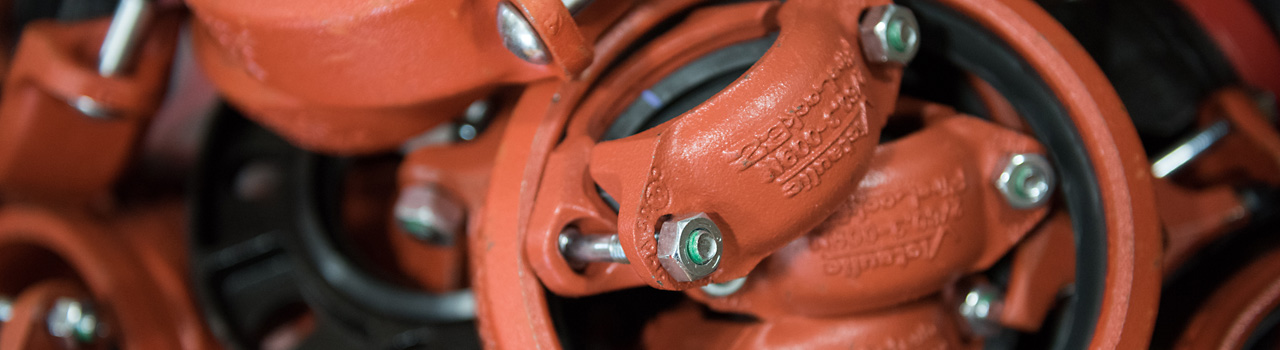
Dry Pipe Fire Sprinkler System
A dry pipe sprinkler system is one in which pipes are filled with pressurized air or nitrogen, rather than water. This air holds a remote valve, known as a dry pipe valve, in a closed position. Located in a heated space, the dry-pipe valve prevents water from entering the pipe until a fire causes one or more sprinklers to operate. Once this happens, the air escapes and the dry pipe valve releases. Water then enters the pipe, flowing through open sprinklers onto the fire.
Advantages of using dry pipe fire sprinkler systems include:
- Dry pipe sprinkler systems provide automatic protection in spaces where freezing is possible. Typical dry pipe installations include unheated warehouses and attics, outside exposed loading docks and within commercial freezers.
Many people view dry pipe sprinklers as advantageous for protection of collections and other water sensitive areas. This perceived benefit is due to a fear that a physically damaged wet pipe system will leak while dry pipe systems will not. In these situations, however, dry pipe systems will generally not offer any advantage over wet pipe systems. Should impact damage happen, there will only be a mild discharge delay, i.e. 1 minute, while air in the piping is released before water flow.
Disadvantages of using dry pipe fire sprinkler systems include:
- Increased complexity - Dry pipe systems require additional control equipment and air pressure supply components which increases system complexity. Without proper maintenance this equipment may be less reliable than a comparable wet pipe system.
- Higher installation and maintenance costs - The added complexity impacts the overall dry-pipe installation cost. This complexity also increases maintenance expenditure, primarily due to added service labor costs.
- Lower design flexibility - There are strict requirements regarding the maximum permitted size (typically 750 gallons) of individual dry-pipe systems. These limitations may impact the ability of an owner to make system additions.
- Increased fire response time - Up to 60 seconds may pass from the time a sprinkler opens until water is discharged onto the fire. This will delay fire extinguishing actions, which may produce increased content damage.
- Increased corrosion potential - Following operation, dry-pipe sprinkler systems must be completely drained and dried. Otherwise remaining water may cause pipe corrosion and premature failure. This is not a problem with wet pipe systems where water is constantly maintained in piping.
With the exception of unheated building spaces and freezer rooms, dry pipe systems do not offer any significant advantages over wet pipe systems.
Contact us to learn more about dry pipe systems and if it is the system you need.